
Quick Answer
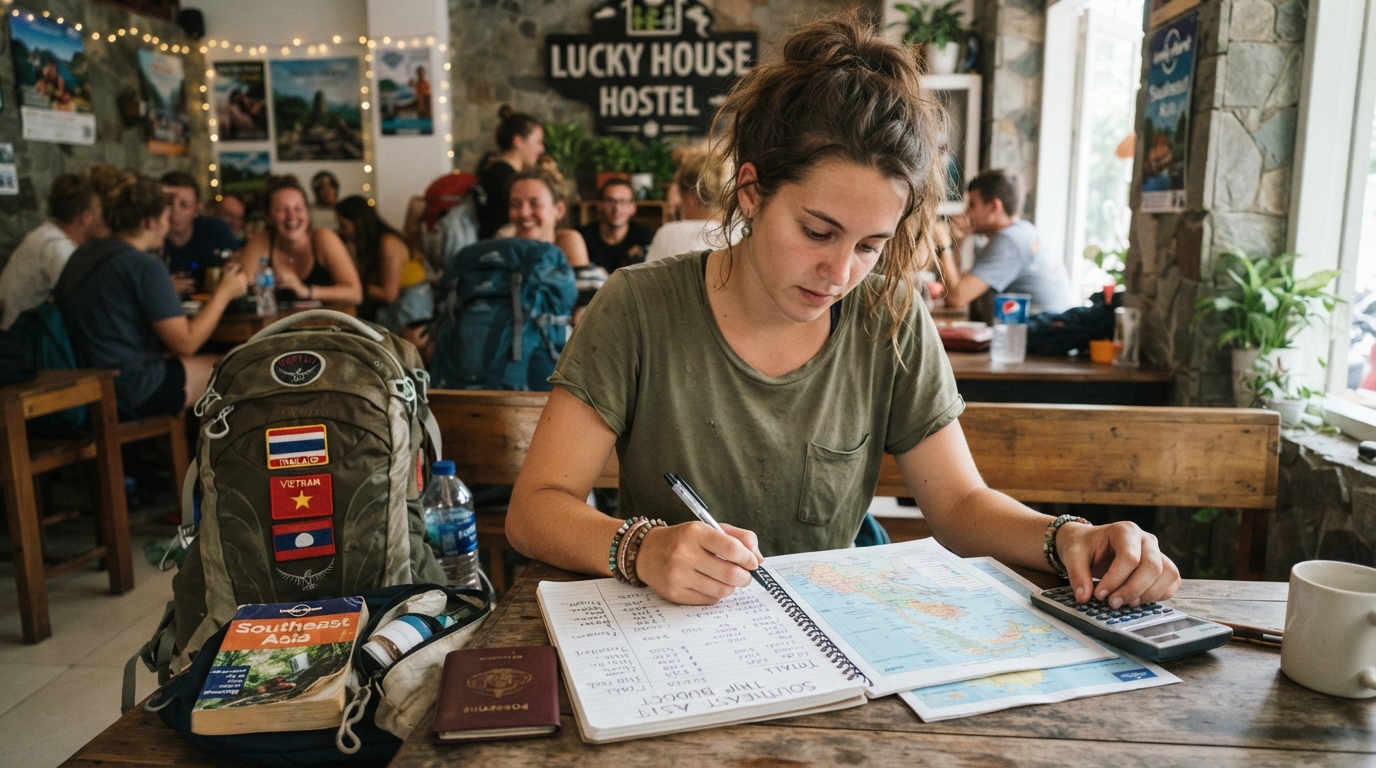
Solo travel can get expensive quickly, but many of the biggest costs are avoidable. The key is to look beyond the advertised price and calculate the real cost of your trip, including lodging, transportation, food, baggage, fees, activities, and travel insurance. Avoiding common solo travel money mistakes—such as choosing inconvenient accommodations, moving between destinations too often, paying unnecessary fees, or failing to set a daily spending limit—can help you travel farther without spending more than necessary.
Traveling alone gives you something group travel can’t: complete freedom.
You choose where to go, when to leave, where to eat, and what to skip.
It can also make travel more expensive.
When you’re alone, there is nobody to split a hotel room with, to share a rental car, and no one to divide the cost of a taxi. Nobody to split the cost of a vacation rental or group transportation.
That doesn’t mean solo travel has to be expensive.
It means you have to be more deliberate about where your money goes.
The biggest savings usually don’t come from skipping a $4 coffee. They come from avoiding the decisions that quietly add hundreds of dollars to a trip.
Here are 15 money mistakes solo travelers should watch for, along with practical ways to avoid them.
Budget Travel Rule: Don’t ask, “What’s the cheapest option?” Ask, “What’s the cheapest option that still makes sense?”
1. Booking the Cheapest Room Instead of the Cheapest Trip
A $55 hotel room isn’t necessarily cheaper than a $75 room.
If the $55 room is 45 minutes from the attractions, requires a $20 rideshare each way, and doesn’t include breakfast, the bargain may disappear quickly.
Calculate the Full Accommodation Cost
The cheapest room is not always the cheapest option. Include transportation, meals, parking, and other costs when comparing accommodations.
Hotel A
- Room: $55 × 3 nights $165
- Transportation to town: $20 × 3 days $60
- Breakfast: $10 × 3 days $30
Hotel B
- Room: $75 × 3 nights $225
- Walkable location $0
- Free breakfast $0
The more expensive room costs more upfront, but the walkable location and free breakfast lower the total trip cost.
Money-Saving Move
Room + taxes + resort fees + transportation + parking + breakfast
Do not compare room rates alone. The FTC also warns travelers to look for additional costs, such as resort fees and taxes, before booking.
2. Moving to a New City Every Night
Backpacking makes it tempting to squeeze five destinations into seven days.
It sounds efficient.
It often isn’t.
Every move can create another transportation expense, another check-in/check-out period, and another opportunity to spend money at a station, airport or tourist area.
See More by Moving Less
Constantly changing cities can increase transportation costs, hotel costs, and the time you spend packing and checking in.
Instead of This
Bangkok → Chiang Mai → Phuket → Krabi → Bangkok
Consider This for a Short Trip
Bangkok → Chiang Mai → Bangkok
Money-Saving Move
For a one-week trip, consider spending at least 2 to 3 nights in your main destinations instead of constantly changing hotels.
You are not trying to collect passport stamps. You are trying to get the most experience for your money.
3. Assuming Solo Means You Need a Private Hotel Room
This is one of the biggest advantages backpackers have.
Hostels aren’t just dorm beds.
Many offer private rooms, shared rooms, kitchens, lockers, common areas and organized activities.
The right hostel can eliminate the single-traveler premium while also giving you a place to meet other travelers.
A current 2026 budget-travel comparison found private hostel rooms frequently priced below budget hotels in several major backpacking regions, although actual prices vary by destination and date.
Compare Your Accommodation Options
Look beyond the first price you see. Compare several types of accommodation before deciding where to stay.
Compare the Final Price
Include taxes, fees, breakfast, transportation, parking, and any other costs. Compare the final price, not just the advertised nightly rate.
4. Renting a Car Because It Seems Convenient
A rental car can make sense.
For one person in a city with good public transportation, it can also become an expensive piece of luggage.
You may pay for:
- Rental
- Insurance
- Fuel
- Parking
- Tolls
- Airport fees
- One-way charges
And you’re paying all of it yourself.
Calculate the Real Cost of a Rental Car
A $35-per-day rental does not really cost $35 per day. Add the extra costs before deciding whether a car fits your budget.
| Cost | Amount |
|---|---|
| Rental, 3 days | $105 |
| Insurance | $45 |
| Fuel | $35 |
| Parking | $45 |
| Tolls | $15 |
| Actual trip cost | $245 |
5. Ignoring the Cost of Getting From the Airport
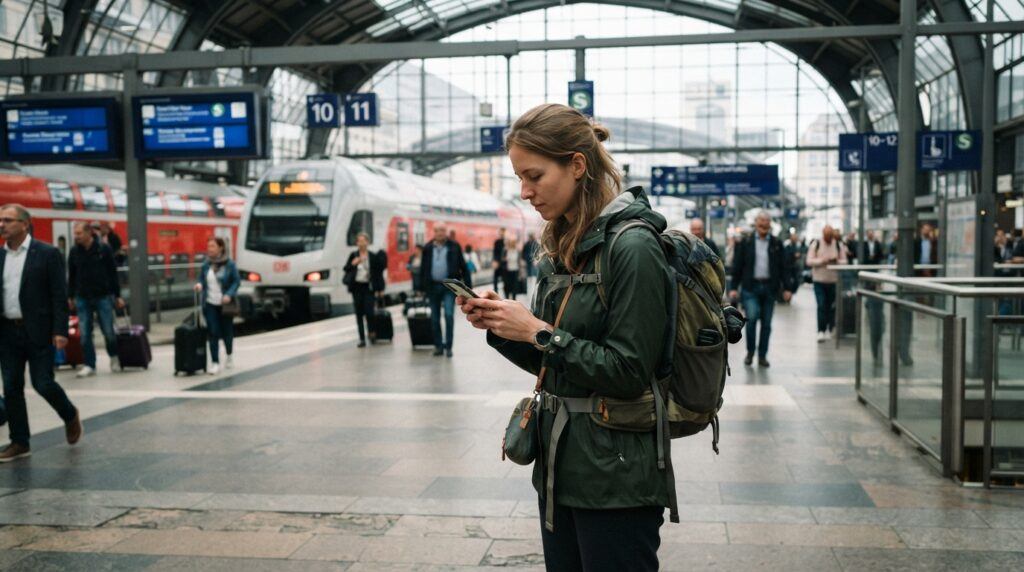
The flight isn’t always the end of your transportation budget.
Sometimes the expensive part starts after landing.
An airport taxi can turn a cheap flight into a surprisingly expensive arrival.
Check Airport Transfer Costs Before Booking
The flight price is only one part of your transportation cost. Before booking, compare the available ways to get from the airport to the city.
- Airport-to-city train
- Airport bus
- Public transit
- Hotel shuttle
- Rideshare pricing
- Taxi rates
- Add the cost to your trip spreadsheet.
Real transportation cost = flight price + airport transfer
6. Eating Every Meal in Tourist Areas
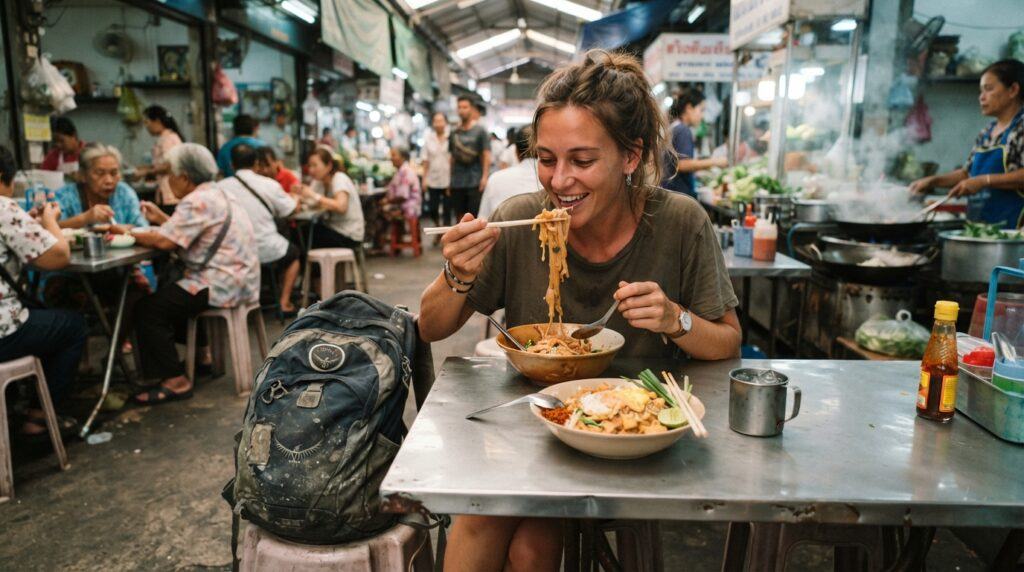
Food is one of the easiest places for a solo traveler to overspend.
You don’t have to live on instant noodles.
You just need to stop assuming the restaurant next to the biggest tourist attraction represents local prices.
Try a Three-Part Food Strategy
You can enjoy local food without paying restaurant prices for every meal. Give each meal a different purpose.
Breakfast
Grocery store, bakery, hostel breakfast, or another inexpensive local option.
Lunch
Local restaurant, market, or street-food area where appropriate.
Dinner
Pick one meal worth spending more on.
You are just not paying tourist-area prices three times a day.
Money-Saving Move
Ask your accommodation staff:
“Where do you eat when you want something inexpensive?”That is often a better question than: “What is the best restaurant?”
7. Paying Foreign Transaction Fees Without Realizing It
Small fees don’t feel important.
Until you add them together.
Your card issuer may charge a foreign transaction fee for purchases made outside the United States or in foreign currency. The Consumer Financial Protection Bureau specifically advises travelers to check their cardholder agreement for international-use restrictions and fees.

Money-Saving Move
Review your payment options before leaving. A few minutes of preparation can help you avoid unnecessary card and ATM fees.
- Check every card you plan to use.
- Find out whether each card charges foreign transaction fees.
- Check ATM fees.
- Know your daily withdrawal limits.
- Carry a backup payment method.
8. Using Random ATMs
The ATM at the airport may be convenient.
Convenient doesn’t always mean cheap.
ATM operators and financial institutions can charge fees, and the CFPB notes that out-of-network ATM fees can be significant.
Understand Your ATM and Card Fees
Check your bank’s policies before leaving home. Knowing how your cards work can help you avoid expensive surprises abroad.
- Which bank networks does your card support?
- Does your bank reimburse ATM fees?
- Does your bank charge international ATM fees?
- Does your card charge currency-conversion fees?
Never wait until you are completely out of cash before figuring out your bank and ATM options.
9. Letting Dynamic Currency Conversion Eat Your Budget
You may occasionally be asked whether you want to pay in U.S. dollars instead of the local currency.
That can look convenient.
But convenience isn’t automatically a good exchange rate.
When using a card abroad, understand what currency you are being charged in and what fees your card issuer applies.
Money-Saving Habit
When offered a choice between local currency and dollars, do not automatically choose dollars simply because the number looks familiar.
Understand the conversion first. Then choose the payment currency.
10. Booking Everything in Advance
Planning ahead can save money.
Overplanning can do the opposite.
If you lock yourself into:
- Nonrefundable hotels
- Prepaid tours
- Fixed transportation
- Multiple internal flights
You lose the flexibility to change plans when a cheaper option appears.
A Better Booking Strategy
Book the things that are likely to sell out or become substantially more expensive. Leave room for everything else.
Book Early
- International flight
- First night’s accommodation
- Required visa
- Popular attraction with timed entry
Consider Booking Later
- Some local tours
- Some day trips
- Some restaurants
- Some local transportation
11. Chasing the Cheapest Flight Without Calculating the Whole Journey

A cheap airfare isn’t necessarily a cheap trip.
The flight might:
- Depart from another airport
- Arrive far outside the city
- Include a long layover
- Require baggage fees
- Arrive after public transportation stops
Compare the Door-to-Door Cost
The cheapest airfare is not always the cheapest trip. Add baggage fees, airport transportation, and other travel costs before you choose a flight.
Flight A
Flight B
Flight B costs $35 more at checkout.
But it saves $50 overall when you include baggage and airport transportation.
12. Trying to Save Money on the Things That Protect You
This one deserves a big warning.
Budget travel does not mean eliminating every form of protection.
The U.S. Department of State recommends considering travel medical insurance and medical evacuation coverage, particularly because U.S. health insurance may not cover medical care abroad and evacuation can be extremely expensive. The State Department says medical evacuation by air ambulance can cost $20,000–$200,000 depending on circumstances.
That doesn’t mean every traveler needs the most expensive insurance policy available.
It means you need to understand what your existing coverage actually does.
Check Your Travel Insurance Before Buying
Travel insurance policies can vary widely. Review the coverage, limits, and exclusions before choosing a policy.
- Emergency medical coverage
- Medical evacuation
- Trip cancellation
- Trip interruption
- Lost or stolen belongings
- Coverage limits
- Exclusions
- Activities you plan to do
- Pre-existing-condition rules, if applicable
13. Choosing a Destination Without Checking the Current Travel Advisory
Cheap doesn’t automatically mean smart.
Conditions change.
Before booking an international trip, check the U.S. Department of State’s current travel advisory for the destination.
Check the Current Travel Advisory
Travel advisories can change. As of summer 2026, the U.S. State Department lists these destinations at the following levels:
Exercise Normal Precautions.
Exercise Normal Precautions, with increased-caution areas near the Cambodia border and in several southern provinces.
Exercise Normal Precautions.
Exercise Increased Caution, with significant differences between regions.
Reconsider Travel, with some areas designated Level 4.
Money-Saving Move
Check the advisory before booking, then check it again shortly before departure.
14. Picking a Cheap Destination That’s Expensive to Reach
This is another mistake that looks harmless on paper.
Vietnam may be inexpensive once you’re there.
Getting there from the United States can be a major part of the trip budget.
Meanwhile, a more expensive destination that is much closer might produce a cheaper overall vacation.
Think in Terms of Total Trip Cost
A cheap hotel does not always mean a cheap trip. Add every major expense before deciding which destination fits your budget.
Not Just This
Trip cost = hotel price
Think About This
Trip cost = everything you will pay from leaving home to returning home
The destination may be inexpensive once you arrive, but the full trip may still cost more than a closer destination.
15. Not Having a Daily Spending Limit
This may be the biggest mistake of all.
You can save $200 on airfare and spend it right back without realizing it.
A daily budget provides a guardrail for your trip.
Example: $75 Daily Budget
A daily spending target makes it easier to control costs while you travel. Adjust the amounts based on your destination and travel style.
| Category | Daily Target |
|---|---|
| Accommodation | $30 |
| Food | $20 |
| Local transportation | $10 |
| Activities | $10 |
| Miscellaneous | $5 |
| Total | $75 |
That doesn’t mean you must spend exactly $75 every day.
If you spend $55 on Monday, you’ve created room for a $95 day later.
That’s the point.
You’re managing the trip budget, not trying to win a contest for who can spend the least money.
How to Prepare for a Budget Solo Trip
The cheapest trip is usually the one you plan before you leave.
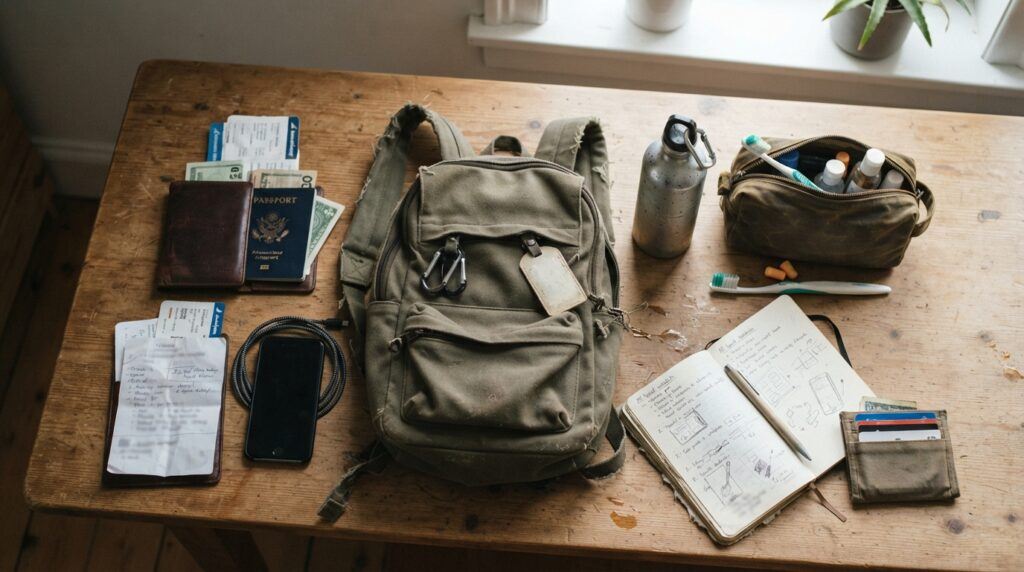
30–60 Days Before
Download this checklist. It costs you nothing and may help you remember something you may otherwise overlook.
Final Trip Preparation Checklist
1 to 2 Weeks Before
- Confirm flights and accommodations.
- Confirm cancellation policies.
- Download offline maps.
- Download airline and hotel apps if useful.
- Save your accommodation address offline.
- Photograph or scan important documents.
- Notify your bank if required.
- Confirm your cards work internationally.
- Check your phone plan or arrange an eSIM.
- Research public transportation from the airport.
- Check the weather forecast.
- Check for transportation strikes or major events.
- Recheck the travel advisory.
- Save emergency contacts.
- Share your itinerary with someone you trust.
The Day Before You Leave
- Passport
- Wallet
- Backup payment card
- Some emergency cash
- Phone
- Charger
- Power adapter
- Medication and prescriptions
- Travel insurance information
- Accommodation confirmation
- Transportation confirmation
- Copies of important documents
- Offline maps
- Emergency contact information
Pack Light
Do not pack for every imaginary scenario. Every unnecessary item becomes something you have to carry, protect, and eventually bring home.
How to Choose a Budget-Friendly Solo Destination
Don’t simply search for “cheapest countries.”
Look for destinations where several budget advantages overlap.
Look for These Budget-Friendly Features
Affordable Accommodation
Hostels and guesthouses can reduce the single-traveler premium.
Good Public Transportation
You do not want a rental car to become a mandatory expense.
Walkable Cities
Walking is free. That sounds obvious, but a walkable destination can save a surprising amount over a week.
Affordable Local Food
A destination where inexpensive local restaurants are easy to find can make a bigger difference than a cheap hotel.
Free Attractions
Parks, markets, historic neighborhoods, beaches, museums with free days, and public spaces can fill an itinerary without filling your credit-card statement.
Reasonable Airport Transportation
This is one of the costs travelers frequently overlook. Check the price of getting from the airport to your accommodation before booking.
Budget-Friendly Destinations Worth Researching
These aren’t guarantees that you’ll spend a certain amount per day. Airfare, season, and accommodation can completely change the numbers.
Instead, think of these as destinations worth investigating when you’re building a budget trip.
Budget-Friendly Destinations to Consider
Daily costs are only part of the decision. Compare airfare, transportation, accommodation, food, activities, safety, and the current travel advisory before choosing a destination.
Vietnam
Level 1Vietnam is one of the strongest candidates for a budget-conscious backpacking trip. Inexpensive food, hostels, and ground transportation can make daily spending relatively manageable.
The U.S. State Department currently lists Vietnam at Level 1, Exercise Normal Precautions, while noting that petty crime is common in popular tourist locations.
Budget Strategy
- Use guesthouses or hostels.
- Eat local food.
- Use trains and buses where practical.
- Stay several nights in each destination.
- Avoid unnecessary domestic flights.
Thailand
Level 1Thailand has a mature backpacker infrastructure and extensive transportation options.
The State Department currently lists Thailand at Level 1, although it identifies specific areas where travelers should exercise increased caution.
Budget Strategy
- Compare hostel beds with inexpensive guesthouses.
- Use local transportation.
- Eat outside tourist-heavy areas.
- Limit expensive island hopping.
- Stay longer in fewer locations.
Portugal
Level 1Portugal is not as cheap as Southeast Asia. However, it can be worth investigating for travelers who want Europe without automatically choosing the most expensive Western European destinations.
The U.S. State Department currently lists Portugal at Level 1 and notes that travelers should remain alert for petty theft, particularly around crowded tourist areas and public transportation.
Budget Strategy
- Use trains and buses.
- Stay outside the most expensive tourist zones.
- Take advantage of inexpensive local restaurants.
- Walk whenever practical.
- Travel outside peak periods when prices are lower.
Mexico
Level 2Mexico can offer excellent value, but it is not a destination where “cheap” should be the only consideration.
The current U.S. State Department advisory is Level 2, and risk varies substantially by state and region.
Budget Strategy
- Choose the destination first.
- Check the advisory for the specific region.
- Research airport transportation.
- Use reputable accommodations.
- Do not sacrifice safety for a cheaper room or transportation option.
The Solo Traveler’s Budget Formula
Before booking anything, build this simple calculation. Include every major cost, not just the price of your flight or hotel.
- Transportation to your destination
- Accommodation
- Food
- Local transportation
- Activities
- Travel insurance
- Fees
- Emergency reserve
The Old Question
“Where can I travel cheaply?”
The Better Question
“Where can I have the trip I want for the least total money?”
That’s a much better question.
The 24-Hour Rule for Travel Spending
Here’s a simple trick that can prevent impulse purchases.
If something isn’t necessary and costs more than your predetermined spending limit, wait 24 hours.
That doesn’t work for everything. You can’t exactly tell a hotel, “I’ll decide tomorrow.”
Use Your Budget for What You Actually Want
This approach works beautifully for optional spending and impulse purchases.
- Expensive souvenirs
- Tours
- Clothing
- Gadgets
- Upgraded rooms
- Unplanned excursions
- “Special” experiences that suddenly appear everywhere
Final Budget Travel Checklist
Before you click Book, ask yourself these questions:
- What is the total trip cost?
- What will transportation actually cost?
- What will baggage cost?
- What will airport transportation cost?
- Have I included taxes and fees?
- Have I compared the total cost of accommodation?
- Can I use public transportation?
- Can I walk to most attractions?
- Can I eat some meals locally?
- Have I checked foreign transaction fees?
- Have I checked ATM fees?
- Have I checked the current travel advisory?
- Do I understand my travel insurance?
- Do I have emergency money?
- Do I have a backup payment method?
- Have I left enough room in the budget for unexpected expenses?
The Bottom Line
Budget solo travel is not about being cheap. It is about eliminating unnecessary expenses so you can spend your money on the parts of the trip you actually care about.
The biggest savings usually come from a handful of decisions:
- Choose the right destination.
- Travel at the right time.
- Stay in the right location.
- Use the right transportation.
- Avoid unnecessary fees.
- Control your daily spending.
A $20 cheaper room is not a bargain if it creates a transportation problem, a security concern, or an expensive headache.
The goal is not the cheapest possible trip.
The goal is to get the most travel you can for the money
you have.