


Is buying airline miles worth it? The emails always arrive with the same breathless energy. “Buy miles now, up to 100% bonus!” A countdown clock ticking in the corner like the deal expires the second you blink. A photo of someone stretched out in a lie-flat seat with a glass of something sparkling, because apparently that’s what 40,000 miles looks like in stock photography.
Airlines run these sales constantly, and they run them because the pitch works on a specific kind of brain: the one that sees “bonus miles” and hears “free money.” It is not free. You are handing over real dollars for a currency that only one company prints, that only one company can devalue whenever it wants, and that only one company decides the worth of once you finally try to spend it. The whole pitch survives by hiding those three facts behind a percentage sign and a sense of urgency that is almost entirely manufactured.
So strip the marketing language off and look at what you are actually being asked to do. You are handing over cash for a currency with no fixed exchange rate, betting it buys more plane ticket than the cash would have bought on its own. Sometimes that bet is genuinely good. Most of the time it is not, and the only way to tell the difference is to do the math the sale email is hoping you skip.
The one formula that tells you whether a purchase is actually a deal
The whole trick fits in one line: compare what you are paying per mile to what you are getting per mile in redemption value. Everything else in this article is just that sentence applied to real numbers.
Cost per mile is arithmetic anyone can do. Take the total price of the purchase, divide by the number of miles you would receive, and you get a figure in cents. A sale advertising miles at “2.1 cents each” is telling you exactly this number, though plenty of sales bury the math under a bonus structure confusing enough that you have to work it out yourself with a calculator and a little stubbornness.
Redemption value per mile is the number that actually matters, and it is the one no airline ever puts in the subject line. Take the cash price of the flight you would book with those miles, subtract whatever taxes and fees you would still owe, then divide by the number of miles the award costs. That is what each mile was worth, in this one specific booking, on this one specific day.
Before trusting that redemption value, check what the same route, dates, and cabin actually cost in cash. My guide to using Google Flights to compare fares and track prices explains the tools that help. Cash-fare alerts do not track award-seat availability.
The rule that follows is almost insultingly simple. If your redemption value per mile beats your cost per mile, you came out ahead. If it does not, you just paid a premium for the privilege of using an airline’s loyalty program as your travel agent.
Most domestic coach redemptions land somewhere between 1 and 1.3 cents per mile. Premium cabin international redemptions, the ones everyone brags about on forums, can push 3, 4, even 6 cents per mile when a business class seat worth $4,000 cash gets booked for 70,000 miles. That gap, between what coach is worth and what premium international is worth, is the entire reason “should I buy miles” does not have one answer. It has two, and they point in opposite directions.
When topping off your balance can save you real money
Here is the scenario where buying miles actually makes sense, and it is narrower than the sale emails want you to believe: you already have an award booking mapped out, you are close, and you are short by a small, specific amount.
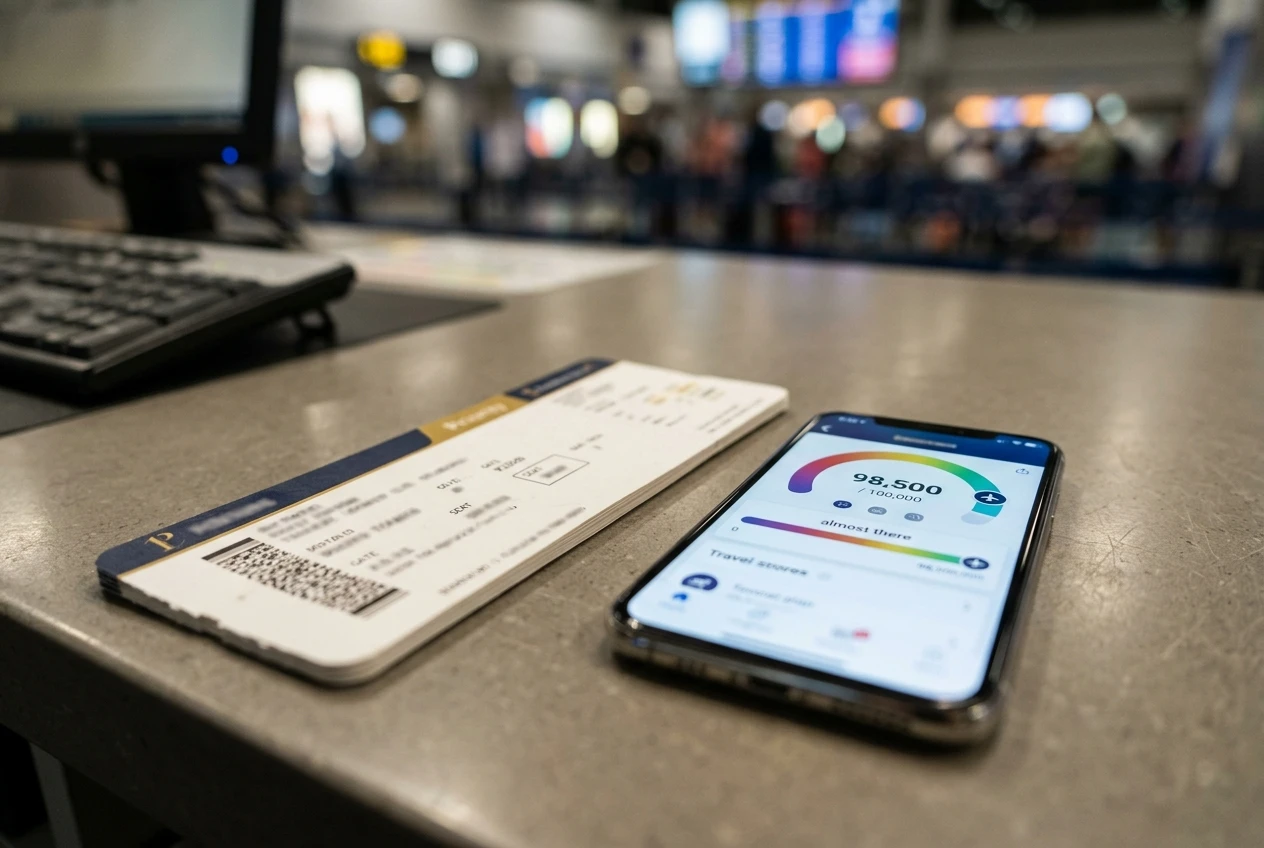
Say you need 65,000 miles for a business class redemption worth roughly $3,800 in cash. You already have 58,000 sitting in your account, earned through spending and flying, effectively free as far as your wallet is concerned. You need 7,000 more, and the airline is selling them at 2.5 cents apiece with a bonus that drops your effective rate to 2 cents. That is $140 to unlock a seat worth $3,800. The redemption value on the whole booking stays enormous, and the marginal miles you bought are just riding along for a steal.
This is topping off, and it is the one situation where the math reliably favors you, because you are not buying the whole trip. You are buying the last few thousand miles of it. The fixed value of the award does not care whether you earned the miles or bought the last sliver of them, so as long as the purchase price of that sliver sits below the per-mile value of the redemption, you win. Airlines know this, which is exactly why top-off purchases are usually capped at small quantities. They will sell you the crumbs. They will not sell you the whole loaf at that price, because then they would be the ones losing the trade, and no airline loyalty program is in the business of losing trades.
The redemptions where purchased miles almost never pencil out
Now the other side, and it is the far more common trap: buying miles from zero, with no award in hand, hoping to accumulate enough for some future trip you have not actually booked.
Economy redemptions are the worst offenders. If a domestic round trip costs $320 cash and the award price is 25,000 miles plus $11.20 in taxes, your redemption value comes out to barely 1.2 cents per mile. Buy those miles at 2 cents during a “generous” sale, and you have just paid $500 for a $320 flight. You would have done better buying the ticket outright, every single time, with none of the paperwork.
If your travel dates have some wiggle room, compare cash fares across nearby dates before buying miles. A cheaper departure or return day could make paying cash the better choice.
Short-haul international redemptions in economy are nearly as bad. The fixed-value credit card miles plenty of budget travelers already hold can beat program miles at these distances without any purchase at all, because a flat 1.25 to 1.5 cent redemption rate does not care whether the flight is short or long, and it does not reward loyalty you have not earned yet.
Buying from scratch only has a shot when you are building toward a premium cabin award specifically, the kind where redemption value climbs into the 3 to 6 cent range. Even then you are betting on a future seat being available when you want it, on award space existing at all, and on the price in miles staying roughly where it sits today. That is three assumptions stacked on top of your arithmetic, and any single one of them can collapse the whole trade before you ever board.
Devaluation risk: why miles you buy today can shrink before you spend them
This is the part the sale emails never, ever mention, and it is what makes buying miles fundamentally different from buying a gift card.

A loyalty program can change its award chart whenever it wants. The business class seat that cost 70,000 miles last year can cost 95,000 miles next year, with no warning beyond a quiet blog post nobody reads until it is too late. Airlines call this “updating the award chart to reflect market value.” Everyone else calls it what it is: your money, repriced downward, after you have already handed it over.
This risk compounds the longer a balance sits unused. Miles purchased for a redemption six months out carry some devaluation risk. Miles purchased “because they’re on sale,” with vague plans to use them eventually, carry a lot more risk, because nobody knows what the award chart looks like by the time you are ready to book. Not you, not the forums, and most days, not even the airline’s own loyalty team.
The practical upshot: run the formula against today’s redemption value, never a hopeful future one, and make sure the gap between your cost per mile and that redemption value is wide enough to survive some shrinkage. A trade that pencils out by a hair today can turn into a loss by the time you actually try to book, and you will not find out until you are staring at a chart that moved while you weren’t looking.
Frequent flyer math
Three real examples of buying airline miles
A sale price only matters if the miles help you book an award that is worth more than they cost. Here is the math, worked out line by line.
Example one
The topping-off win
You need 12,000 miles to complete a redemption with a stated value of $2,600.
1. Buy 10,000 miles at 2.3¢ each: 10,000 × $0.023 = $230
2. A 20% bonus adds 2,000 miles, giving you 12,000 miles
3. Effective purchase cost: $230 ÷ 12,000 = 1.92¢ per mile
4. Redemption value: $2,600 ÷ 12,000 = 21.67¢ per mile
The result: A clear win, based on the stated $2,600 value. It is not a close one.
Example two
The from-scratch loss
You buy 50,000 miles at 2.2¢ each, then use them for a domestic coach flight.
1. Purchase cost: 50,000 × $0.022 = $1,100
2. At 1.3¢ per mile, the award value is 50,000 × $0.013 = $650
3. Difference: $1,100 − $650 = $450
The result: You paid $450 extra to route your money through an airline loyalty program. The sale price does not make this a good deal.
Example three
The premium cabin maybe
You buy 40,000 miles at 2¢ each for a business class award you feel fairly confident about.
1. Purchase cost: 40,000 × $0.02 = $800
2. At an estimated 3.5¢ per mile, the award value is 40,000 × $0.035 = $1,400
3. Potential difference: $1,400 − $800 = $600
The result: A $600 potential margin gives you room for a modest devaluation, but not a steep one. This is a real bet, so be sure you are comfortable with the risk.
My verdict: the narrow window where I’d actually pull the trigger
Buying airline miles is worth it in exactly one situation: you have a confirmed or nearly confirmed award in front of you, you are short by a small amount, the redemption value per mile sits comfortably above the sale price, and the gap is wide enough to survive a devaluation that might land before you ever fly. That is topping off, and it is a genuinely good trade.
Buying miles speculatively, in bulk, because an email used the word “bonus” next to a countdown clock, is worth it almost never. You are betting on a program’s goodwill, a future award chart nobody can see yet, and seat availability that may or may not exist, all to save a few cents per mile on a flight you could probably find for a fair price without taking on any of that risk. The math does not care how urgent the email sounded.
If buying miles fails the math test, start with these practical ways to find cheaper cash flights. Compare dates, nearby airports, and the full ticket cost before deciding how to pay.
If you’re hunting for the flights those miles would actually go toward, here’s my list of travel companies I trust.