


Hidden city ticketing sounds like something you’d hear whispered in an airport bar by a guy who definitely still owes someone money. It has that vibe: too clever, too cheap, probably going to end badly for someone. And the wild part is, it works. It’s legal. It’s also exactly the kind of thing that can get your frequent flyer account nuked overnight, which is a sentence that should make you sit up a little.
So let’s get into what it actually is, how it exploits the way airlines price routes, and why I got right up to the edge of trying it myself before I chickened out.
What Actually Happens When You Skip the Last Leg
Here’s the basic mechanic, stripped down: you book a flight from City A to City C, with a layover in City B. City B is actually where you want to go. You get off the plane in City B, walk out of the airport, and never board the second leg to City C. The airline just assumes you missed your connection or, who knows, died somewhere over the Midwest.
That’s it. That’s the whole trick. You buy a ticket for a destination you have zero intention of reaching, because the layover city, the one you actually want, happens to be cheaper to fly “through” than to fly to directly.
This is called hidden city ticketing, sometimes “skiplagging,” and if you’ve never heard the term before, that’s probably because airlines have spent a small fortune trying to make sure you never do. It only works one direction, on one-way itineraries, and it only works without checked luggage. Keep those two conditions in your head, because they’re the whole ballgame later.
Why Airlines Price It This Way: the Hub-and-Spoke Trick
Airlines don’t price routes based on distance or fuel burned. They price them based on competition and demand on each specific route, which creates some genuinely absurd results.
Say an airline has a massive hub in Charlotte. Flights into Charlotte from smaller cities are priced aggressively because three other airlines are fighting for that same route. But flights from Charlotte onward to, say, a mid-size city where that airline barely has competition? Those get priced like the airline is doing you a personal favor by letting you fly on their plane at all.
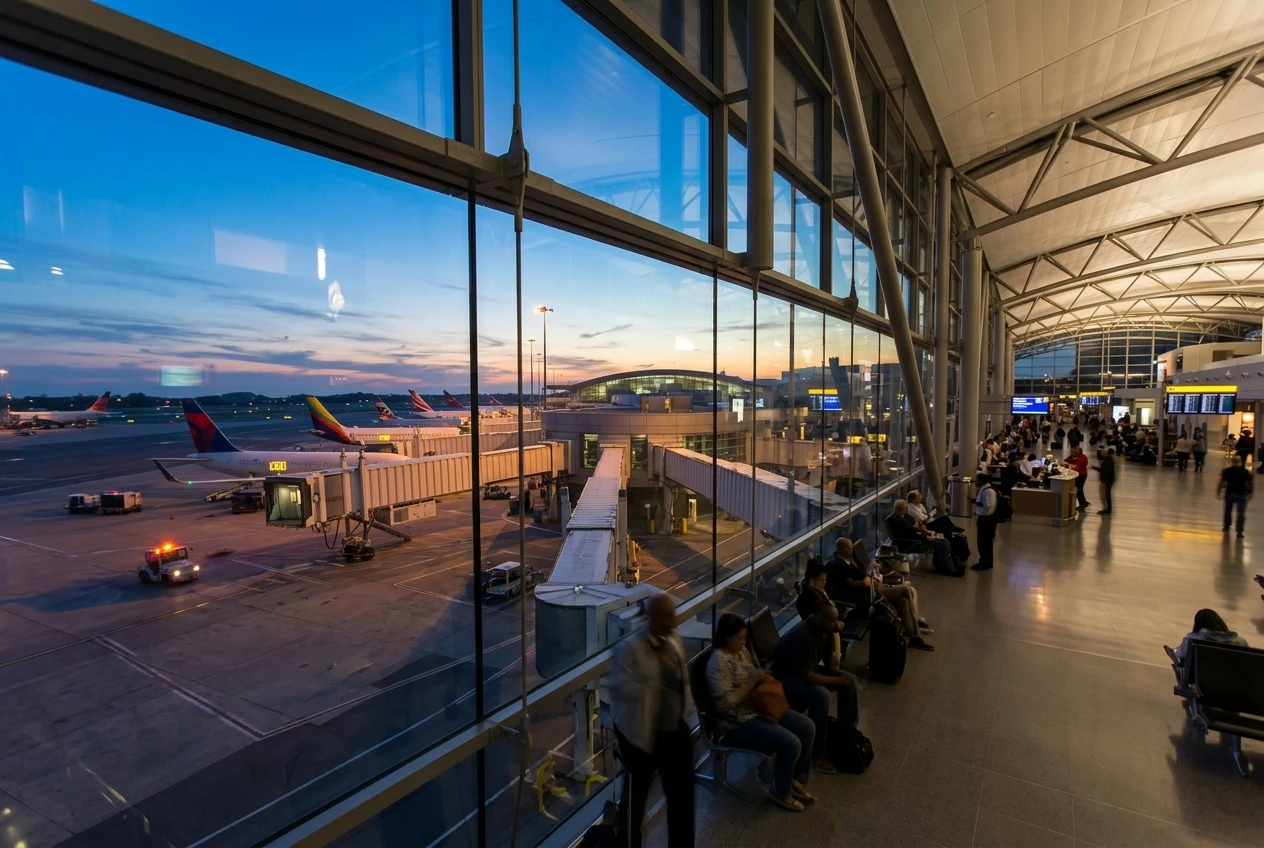
Now stack those two routes together. A flight from City A, through Charlotte, to City C, where Charlotte is actually your intended stop, can come in cheaper than a flight from City A straight to Charlotte. Why? Because the airline is implicitly subsidizing that competitive Charlotte leg to protect market share, and the uncompetitive C leg is dragging in people who need it and have no other option.
It’s an artifact of how hub-and-spoke pricing treats every route as its own isolated contest. Nobody at the airline designed this to be exploitable. It’s a byproduct, a crack that opened up because pricing models are built route by route instead of trip by trip. And once travel nerds figured that out, the crack became a cottage industry.
How People Actually Find These Fares
You’re not finding these by squinting at a normal flight search. Hidden city fares show up through tools built specifically to flag the weird pricing gaps, most famously a site called Skiplagged, which exists almost entirely to surface these exact mismatches.
The search logic is backwards from what you’re used to. Instead of searching City A to City B, you’re hunting for itineraries where City B is a layover on the way to somewhere else, and the “somewhere else” fare is cheaper than the direct one. The tool does that comparison for you, which is honestly the only reason this trick is accessible to regular travelers instead of just aviation nerds with spreadsheets.
If you’re someone who already treats flight shopping like a hobby, this will feel familiar. Chasing fare irregularities, watching for pricing that doesn’t make sense, building the muscle of comparing more than one search engine instead of trusting the first number you see. If that’s you, you’ve probably already read through things like how to track price drops on Google Flights or compared booking platforms against each other to squeeze out a better number. Hidden city ticketing is that same instinct, just dialed up to a setting most people shouldn’t touch without knowing exactly what they’re risking.
The Moment You Lose Everything: Checked Bags and Missed Connections
Here is where the trick turns from clever to genuinely dangerous, and I mean that word literally, not for dramatic effect.

You cannot check a bag. Your suitcase is tagged for the final destination, City C, and it will fly there whether you do or not. If you check luggage on a hidden city itinerary, you are voluntarily shipping your belongings to a city you were never planning to visit, with no realistic way to get them back without a flight you also weren’t planning to take.
Then there’s the connection risk. If your first leg is delayed and you miss the layover entirely, the airline may automatically rebook you on a different routing, one that skips the city you actually wanted and sends you straight through to the final destination. Your whole plan, the thing you built the entire itinerary around, evaporates because of a thirty-minute ground delay that had nothing to do with you.
Round trips are also off the table. If you no-show on a leg, the airline cancels every remaining segment on that ticket automatically, including the return flight you already paid for. One missed leg, and the whole itinerary folds. This only ever makes sense as a one-way move, booked with carry-on only, with a backup plan for what happens if things go sideways.
The Legal Gray Zone: Banned Accounts, Canceled Loyalty Points, and That One Lawsuit
Hidden city ticketing generally isn’t a crime in itself, but it can violate an airline’s contract of carriage. The consequences depend on the circumstances, the airline’s rules, and the applicable law.
Airlines enforce that contract unevenly but ruthlessly when they feel like it. Accounts tied to frequent-flyer numbers used on hidden city bookings have been suspended. Loyalty points earned on those tickets have been clawed back. And at least one major airline took a hidden city booking site to court over it, a case that dragged on for years and generated a lot of headlines but didn’t exactly settle the underlying question of whether the practice itself is wrong, just messy and contested.

The practical risk for you isn’t a courtroom. It’s quieter than that. It’s an email saying your account has been flagged, your miles zeroed out, your name attached to a note somewhere that makes future interactions with that airline a little colder. Most people who do this once never get caught. But “most people” isn’t a guarantee, and airlines have gotten noticeably better at pattern-matching repeat offenders.
When It’s Worth the Risk, and When It’s Just Asking for Trouble
There’s a version of this that’s genuinely low-risk: a one-way trip, carry-on only, booked under an account you don’t particularly care about protecting, on a route where you’ve confirmed the savings are substantial rather than marginal. That’s about as close to “fine” as this gets.
There’s also a version that’s reckless. Checking a bag because you forgot the rule. Doing it on the exact airline whose loyalty program holds your status and your miles. Relying on a tight connection with weather in the forecast. Doing it on a round trip and hoping nobody notices the no-show on leg one before you need leg three. Any of those, and you’re not finding a loophole; you’re setting a trap for yourself.
The savings have to be worth the exposure. If the hidden city fare saves you forty dollars over a normal search, that’s not a trade, that’s just gambling for sport. If it saves you a few hundred on a trip you were already locked into one direction, carry-on bag in hand, fine, that math starts to make sense.
My Own Almost-Attempt, and Why I Backed Out
Once, while looking at flights to Las Vegas. I found a fare that made me stop and look twice. The ticket was cheaper if I booked a flight with a connection beyond Vegas and simply got off at my intended destination. On paper, it looked like one of those travel tricks that makes you wonder why more people don’t do it.
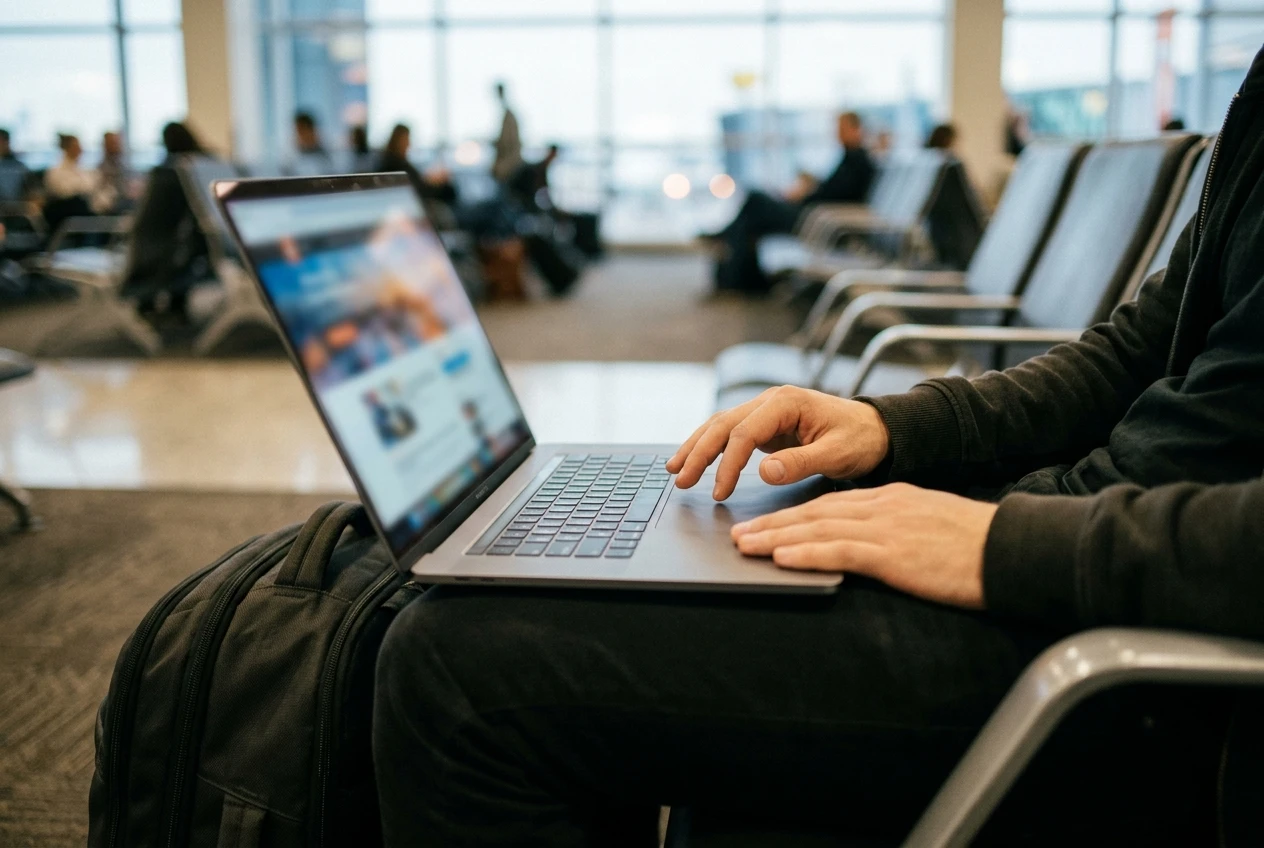
I kept the booking page open and started thinking through the details. What if the airline changed the route? What if I needed to check a bag? What if a delay forced a last-minute change? Suddenly, a cheap ticket didn’t look quite so simple. I’d be building my entire trip around the assumption that everything would go exactly as planned, and anyone who’s spent much time traveling knows that’s a risky bet.
What stopped me wasn’t fear of getting caught, exactly. It was doing the math on what I’d lose if even one small thing went wrong, a delayed first leg, a gate change, a bag I forgot I couldn’t check, against what I’d actually save. The savings were real but not big enough to justify the version of the day where everything falls apart, and I’m standing in the wrong city with no backup plan and an airline that owes me nothing.
That’s really the whole verdict on hidden city ticketing. It’s not a scam, and it’s not a myth; it’s a real pricing gap that real people exploit successfully every day. But it rewards precision and punishes improvisation, and if you’re not someone who enjoys reading contract fine print for fun, the margin for error is thinner than the savings usually justify.
If you want the safer, more reliable version of chasing down a cheap fare, one that doesn’t involve gambling your luggage or your loyalty account, go read mistakes to avoid when searching for cheap airline tickets before you book anything risky.