

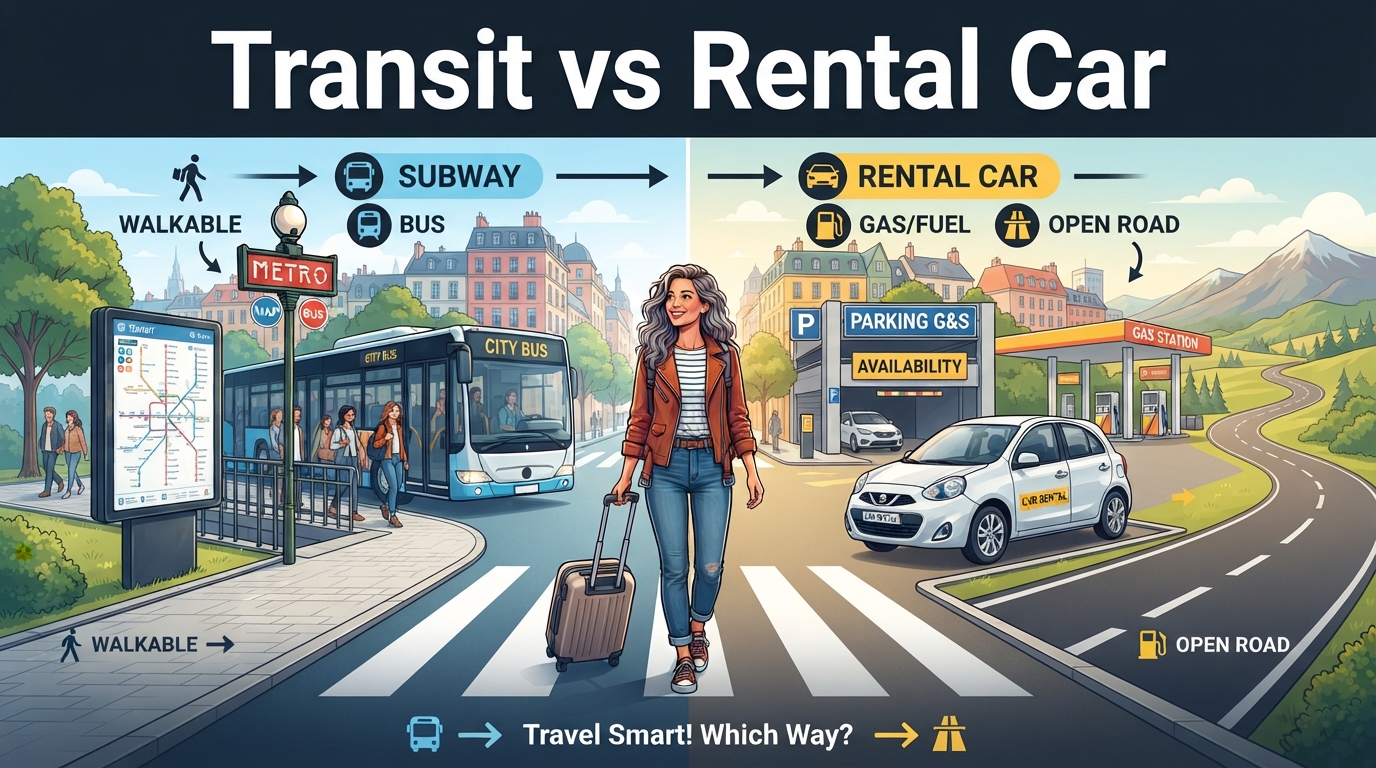
The question has always been: Public transit vs. Rental Car, and which will save you in the long run. A rental car can seem convenient. You pick it up at the airport, load your bags, and drive wherever you want.
Then the bill arrives.
The daily rental rate was only $45, but now you also have taxes, fuel, parking, tolls, insurance, and other fees. That cheap rental does not look so cheap anymore.
For many city trips, public transit can save a lot of money compared with renting a car. Trains, buses, subways, and airport transfers may get you where you need to go for a fraction of the cost.
But public transit is not always the better choice. The right option depends on your destination, group size, travel plans, and patience for waiting at a bus stop.
Here is how to compare public transit and a rental car before your trip.
Why public transit can cost less than a rental car
The main advantage of public transit is simple. You only pay for the trips you take.
A rental car comes with costs even when it is sitting in a hotel parking lot.
Rental car costs add up quickly
The daily rental price is only one part of the total cost. You may also pay for:
- Rental taxes and fees
- Airport facility charges
- Fuel
- Parking
- Tolls
- Rental insurance
- Additional driver fees
- Underage driver fees
- Child car seat fees
- One-way drop-off charges
- Security deposits
- Toll administration fees
Parking can be one of the biggest surprises. A hotel may charge $30 or more per night. Downtown garages can cost even more.
You could pay for a rental car all day, then pay again just to leave it parked.
Public transit usually avoids most of these costs. You pay for a ticket, pass, or transfer. Then you can leave the car problem to someone else.
A simple cost comparison
Here is an example of a three-day city trip. These numbers are for comparison only. Prices vary by destination.
Public transit
About $36
This example includes airport transportation and local transit for one traveler on a three-day city trip.
Rental car
About $305
This example includes the rental, taxes, fuel, tolls, and hotel and city parking.
Estimated savings: Public transit costs about $269 less for one traveler in this example. Actual prices vary by destination.
Three-Day Transportation Cost Comparison
This example compares public transit with a rental car for one traveler on a three-day city trip.
| Cost | Public transit | Rental car |
|---|---|---|
| Airport transportation | $12 | Included with rental |
| Local transportation | $24 | Included with rental |
| Rental car | $0 | $135 |
| Taxes and rental fees | $0 | $45 |
| Fuel and tolls | $0 | $35 |
| Hotel and city parking | $0 | $90 |
| Estimated total for one traveler | $36 | $305 |
Note: This is an illustrative example. Actual transportation, rental, parking, fuel, and toll costs vary by destination.
In this example, public transit saves about $269 for one traveler.
Even with two travelers, public transit would cost about $72. That is still much less than the rental car total.
With four travelers, the numbers get closer:
- Public transit for four people: about $144
- Rental car total: about $305
The rental car may still cost more, but the gap is smaller. If the group takes several long trips, renting may become the better deal.
Public transit works best in cities
Public transit can be a smart choice when you are visiting a city with a strong transportation system.
It is often useful in places with:
- Subway or train networks
- Frequent buses
- Airport rail connections
- Affordable day passes
- Walkable downtown areas
- Expensive or limited parking
- Heavy traffic
- Hotels near transit stations
Large cities often make driving more trouble than it is worth. You may spend time stuck in traffic, searching for parking, or paying tolls.
A train or bus may take you directly to a popular attraction. You can relax, check your directions, and avoid the stress of driving in an unfamiliar place.
That alone can make public transit worth considering.
Use transit passes to lower the cost
Many cities offer daily, weekly, or multi-day transit passes. These can reduce the cost of individual rides.
Before buying one, check the details. Some passes include airport transportation, while others do not. Some cover buses and subways but exclude special airport trains.
Ask these questions before buying a transit pass
A day pass or multi-day pass can save money, but only if you plan to use it often enough. Check these details before buying one.
- ✓ How much does a single ride cost?
- ✓ How many trips will I take each day?
- ✓ Does the pass include airport transportation?
- ✓ Does it cover all the areas I plan to visit?
- ✓ Can I share the pass, or does each traveler need one?
- ✓ Does it include discounts for children or seniors?
When a rental car is the better choice
Public transit is not the right answer for every trip. A rental car can be a better idea when you need flexibility or plan to travel outside the city.
Having a rental may make more sense when you:
- Visit rural areas
- Explore national parks
- Stay in a small town
- Plan several day trips
- Travel between multiple destinations
- Carry camping or sports equipment
- Travel with young children
- Have several large bags
- Visit places with limited bus or train service
- Need to travel early in the morning or late at night
Choosing to use a rental car can also be cheaper for a larger group. Four people can split the cost of one car, while everyone must pay for their own train or bus ticket.
The key is to compare the total cost for the group, not just the cost per person.
Public transit vs. rental car for families
Families should consider more than the ticket price.
Public transit can save money, but it may be harder when you have:
- A stroller
- Several suitcases
- Tired children
- Car seats
- Multiple transfers
- Long walks between stations
A rental car may offer more comfort and control. It can also save time if your hotel is far from a transit station.
Still, do not assume a rental is automatically better for a family. Parking, fuel, and rental car seats can be expensive. Check whether your hotel charges for parking before you book the car.
Choose public transit when…
- You are staying in one city.
- Your hotel is near buses, trains, or subways.
- Parking is expensive or hard to find.
- You are traveling alone or with one other person.
- You can use an affordable day or multi-day pass.
- You do not need to carry much luggage or equipment.
Choose a rental car when…
- You are visiting rural areas or national parks.
- You plan several day trips.
- You are traveling with a larger group.
- You have camping gear, sports equipment, or several bags.
- Your destinations have limited public transportation.
- You need to travel on your own schedule.
The best option may be a mix of both
You do not have to choose one option for the entire trip.
A hybrid plan can save money and give you more flexibility.
For example:
- Use a train from the airport.
- Take buses and subways around the city.
- Rent a car for one day to visit places outside the city.
- Return the car before heading back downtown.
This approach can work well when you only need a car for a few activities. You avoid paying for a rental while you sleep, shop, or explore places that are easy to reach by train.
You can also rent from a neighborhood location instead of the airport. Airport rentals often include extra fees. Just make sure the cost of reaching the rental location does not cancel out the savings.
How to compare the real cost
Use this simple formula before making a decision.
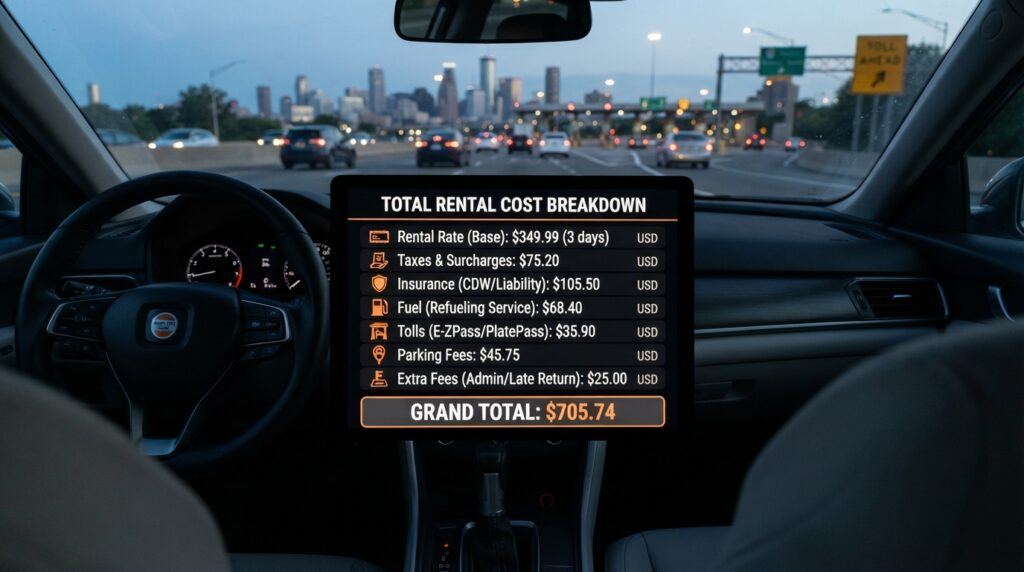
The Total Rental Car Cost vs Public Transit Cost
Rental rate + taxes + insurance + fuel + tolls + parking + extra fees
“`VS
Airport transportation + transit fares or passes + occasional taxis or rideshares
“`Also consider your time.
A rental car may cost more but save hours of transfers. Public transit may cost less but require more planning.
For a short weekend trip, convenience may be worth paying for. For a longer city stay, the savings from public transit can become significant. Always calculate the real cost of a rental car. The advertised daily rental rate is not always the final price.
Questions You Should Ask
Questions to Ask Before Renting a Car
The daily rental rate is only part of the cost. Check these details before you book.
Public Transit Questions
Questions to Ask Before Choosing Public Transit
Before relying on public transit, check these details to make sure it fits your trip.
- Is there transportation from the airport?
- Does the system run near your hotel?
- How late do trains and buses operate?
- How much luggage can you bring?
- Are tickets easy to buy?
- Will you need several transfers?
- Does the route operate on weekends?
- Is the area safe and easy to navigate?
- How much will taxis or rideshares cost when transit is unavailable?
Using Public transit is usually cheaper for city vacations
Public transit is often the better financial choice when you are staying in one city. It can help you avoid rental fees, fuel, parking, and tolls.
A rental car is usually a better fit for road trips, rural destinations, outdoor activities, and larger groups.
The best choice comes down to your full trip plan.
Do not compare a $15 transit pass with a $45 rental rate. Compare the final cost of both options, including the costs that are easy to forget.
Considerations For Transport
If you only need a car for one or two days, consider using public transit for most of the trip and renting a car only when it makes sense. That may give you the best mix of savings and freedom.

Do you have questions?
Public Transit vs. Rental Car FAQ
Get quick answers about transportation costs, rental car fees, and choosing the best option for your trip.
Is public transit cheaper than renting a car?
Public transit is often cheaper for solo travelers and city trips. It can help you avoid rental fees, fuel, parking, tolls, and insurance. A rental car may cost less for a larger group or a trip with several long drives.
When is a rental car a better choice?
A rental car may be better when you are visiting rural areas, national parks, small towns, or destinations with limited public transportation. It can also make sense when you are carrying a lot of luggage, traveling with children, or planning several day trips.
What costs should I compare before renting a car?
Compare the rental price with taxes, insurance, fuel, tolls, parking, additional driver fees, deposits, and any drop-off charges. The advertised daily rate is not always the final cost.
Are public transit passes always cheaper?
No. A transit pass is not automatically cheaper. Compare the price of the pass with the cost of individual rides. If you only plan to take two trips, paying per ride may cost less.
Can I use public transit and rent a car on the same trip?
Yes. A combination of both can be a smart way to save money. Use public transit in the city, then rent a car for one day when you want to visit places outside the normal bus or train network.
Tip: Compare the full transportation cost for your trip, not just the rental car’s daily rate or the price of one transit ticket.
Ready to Find a Way To Save?
Ready to compare?
Check rental car prices before you book
If public transit does not fit your trip, compare rental car offers before choosing a vehicle. Check the total price, mileage rules, cancellation policy, fuel policy, pickup location, and parking costs so you know what you are really paying.
Review offers from multiple providers.
Look for fees, mileage, and fuel rules.
Compare airport and neighborhood locations.
Prices and booking terms vary by provider. Review the final offer before completing your reservation.
Disclosure: This page may contain affiliate links. If you book through one of these links, we may earn a commission at no extra cost to you.