

The $39 fare that turned into a very expensive carry-on
Picture the search results: one airline at $39 each way, the next at $89. You pick the $39 one, obviously. Then you click through the booking screens and watch the total climb. The carry-on is extra. A seat is extra. The bag you assumed was included belongs to a higher fare class you were never shown. By the final page, the $39 flight costs more than the $89 one, and you’ve spent twenty minutes feeling clever.
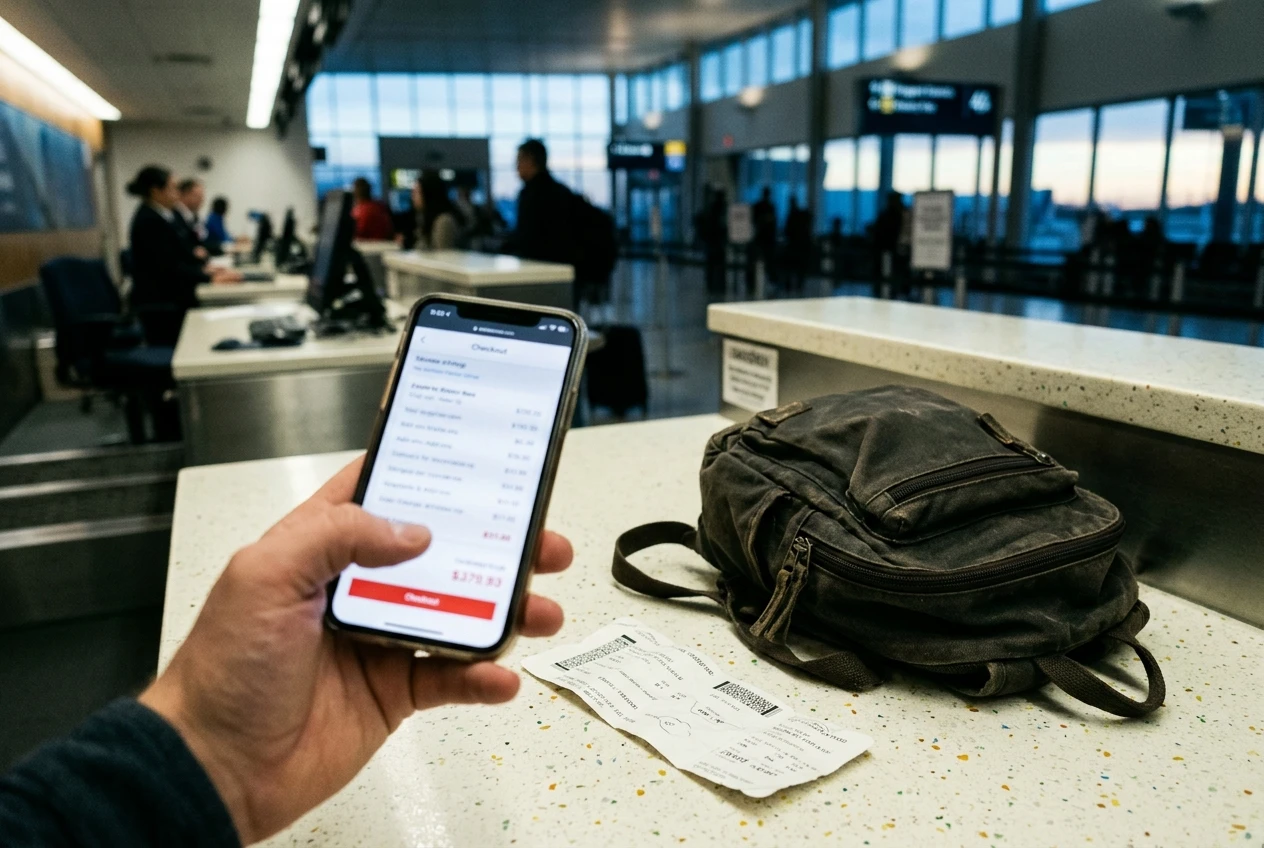
This makes me properly annoyed, because the system is built so that the first number you see is the least honest one. The low fare gets a spot at the top of the results, and the real price shows up three screens later, when you’re emotionally committed to the trip.
So here is how to avoid airline baggage fees, or at least stop being surprised by them: treat the bag as part of the ticket and never compare a fare until you’ve added it. The rest of this article is the method.
Why the ticket price and the trip price are two different numbers
The ticket price pays for a seat from A to B. Everything else is billed separately on many airlines: a carry-on that won’t fit under the seat, a checked bag, choosing where you sit, sometimes printing a boarding pass at the airport. Airlines unbundle these on purpose. It lets them advertise a headline fare, and it lets the people who need a bag subsidize the people who don’t.
I have no problem with unbundling in principle. If you really can travel with a small backpack, you shouldn’t pay for a suitcase. My problem is the display. The headline fare is for a person who brings almost nothing, and most travelers are not that person. If you’re taking a weekend bag, a roller or a family’s worth of luggage, the headline fare doesn’t describe your trip.
The number you actually care about is the trip price: fare, plus bags, plus anything else you’d refuse to go without, each way. Everything below is about getting to that number before you hand over your card.
Reading a fare like a suspicious person
Most airlines sell at least two tiers, and the names vary. The cheapest is usually called basic, economy light or something similarly cheerful. The next one up is standard or main cabin. What each includes differs by airline and by route, so I won’t pretend there’s a universal rule. Here is what to check on every fare, every time:
- Personal item: almost always included, but the size limit differs by airline.
- Carry-on bag: included on some basic fares, charged on others. This is the one that surprises people most.
- Checked bag: usually extra on basic, sometimes included on standard, sometimes extra on both.
- Seat selection: basic fares often assign a seat at check-in, which matters if you’re traveling with someone.
- Changes and cancellations: basic is typically the most restrictive, which is a cost if your plans might move.
The information is there, but it’s often behind a “fare details” or “baggage” link in small type. Open it. Treat the page the way you’d treat a contract from someone who just told you how little it costs. I know that sounds paranoid. It’s also about two minutes of reading that can save you a surprisingly large amount.
One more habit: look at the airline’s own baggage page, not just the booking screen or a third-party summary. Fees change, and the airline’s page is the one that counts at the gate.
The real-total method
Here is the whole thing, and it’s boring in the best way. Do it for every airline you’re considering.
- Write down your bags. Personal item only? One carry-on? One checked bag? Be honest. Don’t plan for the trip you imagine; plan for the one you’ll actually pack.
- Get the basic fare and the standard fare for the same flights and dates.
- Add the bag fees to the basic fare. Check whether the fee is charged each way, because on a round trip it usually is. Then check whether the fee is cheaper if you pay at booking.
- Add seat selection only if you’d really pay for it. If you’re traveling with someone and want to sit together, you would.
- Compare the totals, not the headline fares. Put the standard fare next to the “basic plus bags” total.
Here’s an example with made-up numbers, purely for the arithmetic. Airline A sells a basic fare at $39 each way, and its carry-on costs $55 each way when added at booking. Airline B sells a standard fare at $89 each way with a carry-on included.
- Airline A: ($39 + $55) × 2 = $188
- Airline B: $89 × 2 = $178
The $39 fare loses by $10, and that’s before counting that the standard fare may come with easier changes. Change the numbers and the answer flips: if the bag fee on Airline A were $25, it would win comfortably. That’s the point of running it. You can’t guess which way it goes. The result depends entirely on your bags and on the fees for those specific flights.
If you want a sanity check on the broader search before you get into the bag math, my guide to how to book cheap flights covers the other levers: dates, timing, and where to look.
Packing light without feeling punished for it
If the math says the bag is the expensive part, the cheapest bag is the one you don’t pay for. I’m all for packing light when it works. I’m against the version where it feels like a penalty.
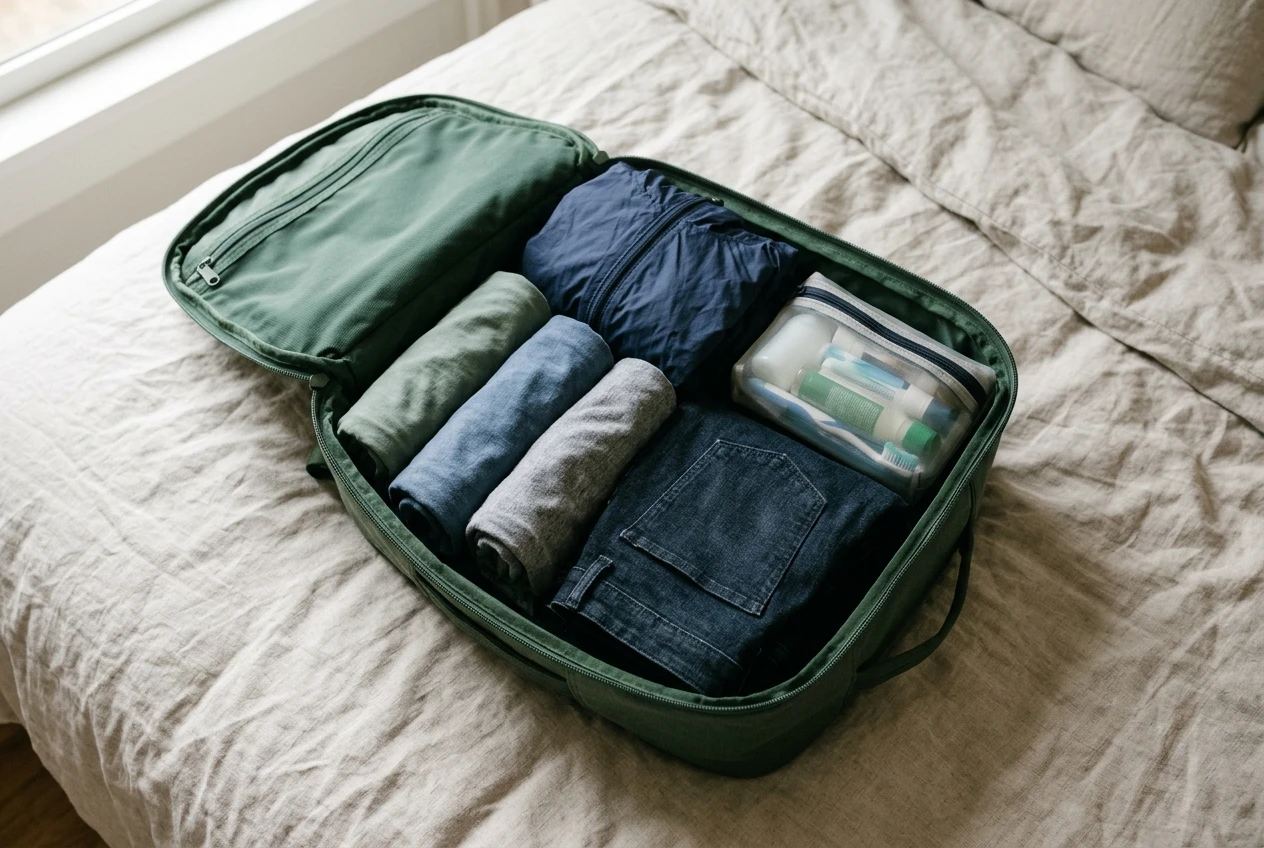
Packing light gets easier when you decide what the bag is for. A personal item that fits under the seat can hold more than people think, if you stop packing for emergencies that won’t happen. A few things help:
- Plan outfits around a small number of items that mix with each other, and wear the bulkiest pieces on the plane.
- Check whether you can wash clothes where you’re staying. A trip with laundry access needs far less luggage than one without.
- Leave full-size toiletries at home and buy what you need when you arrive, or use travel sizes within the airline’s liquids rules.
- Measure your bag against the airline’s posted personal item dimensions before you commit to a plan that depends on it.
There’s a limit, though. If you’re traveling for a week or two with cold-weather clothes, sports gear, or gifts for people you haven’t seen in a while, forcing everything into a backpack is a false economy. You’ll spend more in stress than you’d save in fees. That’s a perfectly good reason to move on to the next section.
When paying for the bag is the smart move
Sometimes the right answer is to pay the fee and stop being precious about it. The fare math will tell you when. If the basic fare plus bags comes to about the same as, or more than, a standard fare, buy the standard fare. You get the same bag, usually more flexibility, and you stop fighting the booking page.
If you do need to pay for a bag separately, pay before you get to the airport. On many airlines, adding a bag during booking or in the days before the flight costs less than adding it at check-in, and the airport counter or the gate is often the most expensive place of all. Fees vary, so check your airline’s page for the actual difference on your route. The pattern of “cheaper early, costlier late” is common enough that it should be your default assumption.
A decent rule for deciding:
- Personal item only: take the basic fare, if the item fits the airline’s size limit.
- One carry-on: compare basic plus carry-on fee against standard. Whichever total is lower wins.
- Checked bag: compare basic plus checked bag against standard, and check whether the standard fare includes a checked bag or only a carry-on.
- Two or more bags, or a family: do the math per person. This is where a higher fare class most often pays for itself.
Fee traps that catch careful people
Even people who read the fine print get caught by these.
Personal item sizes. “Personal item” doesn’t mean the same thing everywhere. Airlines set their own dimensions, and some are stricter than others. A bag that fits under the seat on one airline may get measured, found too big, and charged as a carry-on on another. If your plan depends on a personal item, check the dimensions for each airline you’re comparing.
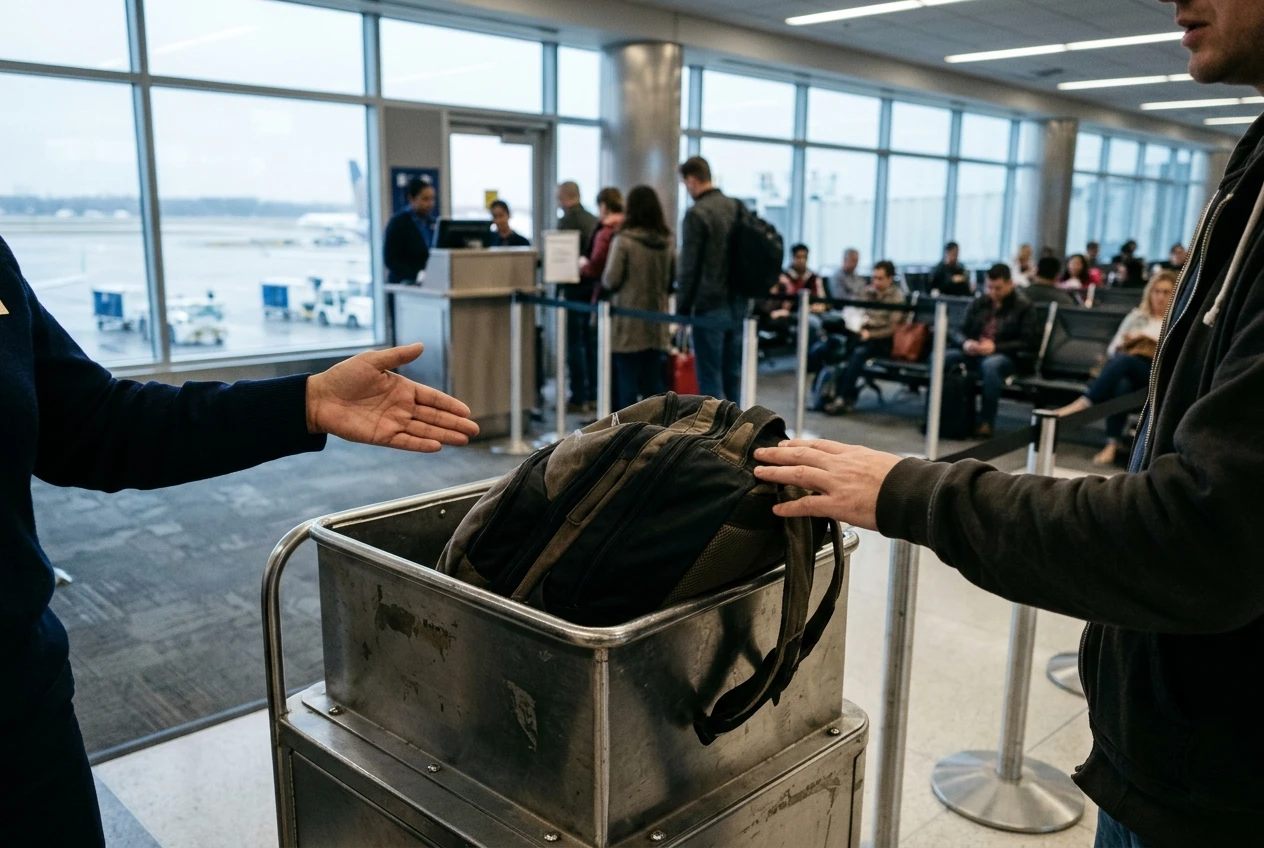
Gate checks. If the overhead bins fill up, you may be asked to check a bag at the gate. On some airlines, that’s free. On others, if your fare didn’t include the bag, you’ll pay a gate fee, which is often the highest price you could have chosen. Boarding earlier or packing to fit under the seat avoids the situation.
Hidden city tickets. The trick involves booking a flight that continues past the city you actually want and leaving the trip at the layover. A checked bag goes to the final destination on the ticket, so you can’t do it with one. It’s carry-on only, with all the size limits above. My explainer on hidden city ticketing goes through the risks properly, and the bag problem is only one of them.
Multi-airline trips. If you book flights on separate tickets, with different airlines or without a through-ticket, your bag usually isn’t transferred for you. You collect it, recheck it, and pay that second airline’s bag fee. Two cheap fares with two sets of bag fees can cost more than one through-ticket. It also adds risk: if the first flight is late, the second airline owes you nothing.
For a wider look at what trips people up when searching, my piece on mistakes to avoid when searching for cheap airline tickets covers more ground than the bag math alone.
Comparing total fares in one search, then sorting out where you’ll sleep
Doing this by hand across five airlines gets tedious, so I start with a search tool that shows many fares at once. That gives me the airlines and flight times to work from. Then I open each contender’s fare details and run the real-total method. The search tool narrows the field. The bag math picks the winner.
Be careful at this stage: some results show the lowest fare class by default and may not include the bag you need. Check what the price covers before you decide it’s the cheapest. If a filter for bags is available, use it, but still confirm on the airline’s page.
Once the flight is sorted, the hotel is the other big number. A cheap flight loses its appeal if the room costs twice what you’d planned, so look at both at the same time, for the same dates.
Before you book your next flight, run the search on KAYAK, add your bags to the fare in your head, and compare the real totals. Then check hotels for the same dates through my Booking.com link so the savings carry through the whole trip.